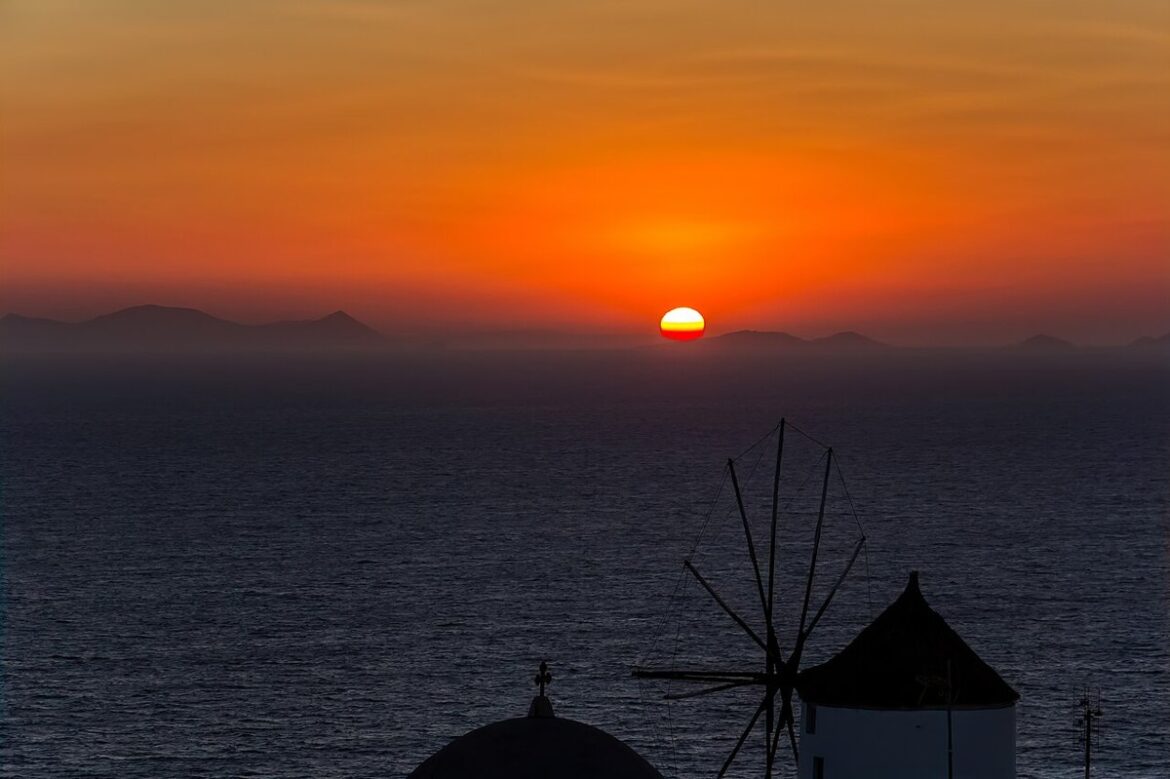
Few places on earth announce themselves quite like Santorini. As your ferry rounds the southern edge of the Cyclades, a wall of black and rust-red rock rises out of the Aegean, and clinging to its rim are the whitewashed houses that have become shorthand for Greek summer everywhere. The island is the rim of a drowned volcano, and the deep blue water filling the caldera below is not a bay but a flooded crater, sunk during one of the most violent eruptions the ancient Mediterranean ever witnessed. That geological drama is the reason Santorini looks unlike anywhere else, and it is the reason a small island barely larger than a city neighborhood can hold so much wonder.
But Santorini is more than a postcard. Behind the famous blue domes lie quiet vineyards growing grapes in volcanic ash, fishing hamlets where the day still revolves around the catch, beaches in colors you will not see elsewhere, and a food culture built on cherry tomatoes, capers, and white eggplant grown without a drop of rain. This guide walks you through the best things to do, the villages worth your time, where to eat and sleep, when to come, and how to move around an island that rewards both the dreamer chasing a sunset and the traveler who wants to dig a little deeper. Whether you have two days or two weeks, the goal is the same: to see past the crowds and fall for the real island underneath.
The news portal Picantiko.gr news covers news, technology, business and travel every day, giving readers clear, reliable and always up-to-date coverage from Greece and around the world.
Watching the Sunset and the Caldera Towns
The caldera is the heart of Santorini, the curving cliff edge where almost every iconic photograph has been taken. Along its rim sit the island’s most celebrated towns, each terraced down toward the water so that homes, cafes, and churches seem to spill over one another. This is where you come to feel the scale of the place, to stand on a balcony with the volcano steaming faintly across the water and the whole Aegean opening out beyond it.
Oia and Its Famous Light
Oia, at the island’s northern tip, is the village that launched a thousand screensavers. Its lanes are narrow and stepped, lined with art galleries, jewelers, and tiny boutiques, and its blue-domed churches have been photographed more than almost any building in Greece. The sunset here is legendary, and rightly so, but it is also the busiest moment on the island. To enjoy it, arrive early and claim a spot along the old castle ruins, or sidestep the crush entirely by watching from a cafe terrace with a glass of crisp Assyrtiko in hand. In the morning, Oia is a different and gentler place, almost empty, the marble paths cool underfoot and the light soft and golden.
Fira, Firostefani, and Imerovigli
Fira is the island’s capital and its busiest hub, a tangle of shops, restaurants, and clubs strung along the cliff. It is lively, sometimes loud, and endlessly convenient, with bus connections to nearly everywhere. Just north, the smaller settlements of Firostefani and Imerovigli offer the same heart-stopping views with a fraction of the noise. Imerovigli in particular, perched at the caldera’s highest point, is often called the balcony of Santorini, and a walk along its quiet paths at dusk is one of the most romantic things you can do anywhere in the country.
Read more: Αρνητικές Κριτικές Google για Τουριστικά Γραφεία
One of the finest ways to experience the caldera is on foot. The cliff-top trail linking Fira to Oia runs for around ten kilometers, threading through Firostefani and Imerovigli before opening onto wild, exposed ridgeline. Allow three to four hours, wear proper shoes, carry water, and set out early or late to dodge the heat. The reward is a slow, unfolding panorama that no bus tour can match.
Exploring the Island’s Unique Beaches
Forget golden sand. Because Santorini was forged by fire, its beaches come in dramatic volcanic shades, and swimming here feels like stepping into another world. The variety packed into such a small island is remarkable, and a day spent hopping between two or three of them is a perfect way to slow down.
- Red Beach, near ancient Akrotiri, is framed by towering crimson cliffs that glow at midday. It is one of the most photographed coves on the island, reached by a short walk over rocky ground, and best enjoyed with sturdy footwear and a sense of adventure.
- Perissa and Perivolos stretch along the southeast coast as a long ribbon of jet-black sand, backed by tavernas, beach bars, and water-sports outfits. This is where to come for a full, lazy beach day with sunbeds and cocktails.
- Kamari sits beneath the imposing bulk of Mesa Vouno mountain, its dark pebbled shore lined with a pleasant pedestrian promenade and a string of restaurants.
- White Beach and the so-called caldera beaches near Akrotiri are reachable mainly by small boat, and their seclusion makes them feel like a private discovery.
- Vlychada, on the south coast, is backed by surreal wind-sculpted cliffs of pale volcanic rock that resemble a lunar landscape, and it stays quieter than the bigger resorts.
A word of practical advice: black sand absorbs heat ferociously and can become too hot to walk on barefoot by midday, so bring sandals. The water tends to deepen quickly, and afternoon winds can pick up, so check conditions before a long swim.
Ancient History and the Lost Bronze Age City
Long before the white houses arrived, Santorini was home to one of the most sophisticated civilizations of the ancient Aegean. The cataclysmic eruption that shaped the island also buried a thriving Bronze Age town under meters of ash, preserving it in extraordinary detail for thousands of years.
Read more: Roofing SEO Company: How to Choose the Right Partner to Dominate Local Search
The excavated site of Akrotiri is often described as a Minoan Pompeii, and the comparison is fair. Walking the covered archaeological site, you move past multi-story buildings, paved streets, drainage systems, and storage jars left exactly where their owners abandoned them. The famous frescoes that once decorated these walls, full of leaping antelopes, boxing children, and blue monkeys, now reside in museums, but standing among the ruins gives a vivid sense of a wealthy, advanced society cut short. It is one of the most important and atmospheric ancient sites in all of Greece, and remarkably it remains less crowded than the island’s beaches.
For another window into the past, climb to Ancient Thira, a windswept ridge between Kamari and Perissa where Greeks, Romans, and Byzantines all built in turn. The ruins of temples, houses, and an agora sit high above the sea, and the views alone justify the effort. Down in Fira, the small but excellent Museum of Prehistoric Thira fills in the story with finds and the celebrated wall paintings recovered from Akrotiri.
Volcano Walks and Hot Springs by Boat
You cannot truly understand Santorini until you set foot on the thing that made it. In the center of the caldera float the small islets of Nea Kameni and Palea Kameni, the still-active volcanic cones that have risen from the sea floor over the centuries. Boat excursions depart daily from the old port below Fira and from other harbors, and they are among the most memorable outings you can book.
On Nea Kameni you hike a dusty trail to the crater rim, passing fumaroles that hiss faint sulphurous steam and lava fields still warm underfoot, a reminder that the island is sleeping rather than dead. Many tours then continue to Palea Kameni, where you can swim from the boat into a cove fed by warm, iron-rich springs that stain the water a coppery orange. The combination of a volcano hike, a thermal swim, and a sunset cruise back across the caldera makes for a full and unforgettable day on the water. Catamaran trips often add a barbecue on deck and stops for snorkeling near the colored beaches, turning the outing into a floating feast.
See also: Santorini Greece Travel Guide: Best Things To Do in Santorini
Read more: Επιλέξτε την Agrowood για ποιοτικά καυσόξυλα και ξύλα για τζάκι στην Αθήνα
Inland Villages and the Real Santorini
Step away from the caldera rim and the island changes character entirely. The flat interior and the eastern slopes are dotted with traditional villages where life moves at a slower, more local pace, and where the prices and the crowds both drop sharply. These places offer the most rewarding glimpse of everyday island life.
Pyrgos and Megalochori
Pyrgos was once the capital of the island, and its old town climbs in concentric rings up a hill crowned by a Venetian castle. Wandering its quiet alleys, past blue-shuttered houses and small churches, you reach a summit with a sweeping view across the whole island, all the way to the sea on both sides. Nearby Megalochori is a sleepy, beautifully preserved village of vaulted mansions and bell towers, perfect for an unhurried afternoon stroll and a coffee in a shaded square.
Emporio and the Wine Country
Emporio, the largest village in the island’s interior, hides a wonderful medieval core of narrow defensive lanes designed to confuse long-ago pirates. Surrounding these villages spread the vineyards that produce Santorini’s prized wines, where vines are trained into low circular baskets called kouloura to shield the grapes from wind and trap precious moisture. A visit to one of the local wineries, glass in hand and vineyard rolling out below, is among the island’s quiet pleasures.
Eating and Drinking Like a Local
Santorini’s volcanic soil produces ingredients found almost nowhere else, and the island’s cuisine is a genuine highlight rather than an afterthought. The lack of fresh water concentrates flavors, giving the local produce an intensity that has made the island a destination for food lovers in its own right.
Seek out the small, sweet Santorini cherry tomatoes, often turned into fritters known as tomatokeftedes. Try fava, a silky puree of yellow split peas drizzled with olive oil and topped with onion and capers, which carries a protected origin status here. White eggplant, capers and caper leaves, and the local cheese chloro all appear on traditional menus. Fresh fish and seafood are everywhere, from grilled octopus to plump prawns, best enjoyed at a taverna with your feet near the water.
Read more: SEO για ηλεκτρονικά καταστήματα: σελίδες κατηγοριών και φίλτρα που πουλάνε
And then there is the wine. The flagship grape is Assyrtiko, which yields a bone-dry, mineral white with bright citrus and a salty edge that pairs beautifully with seafood. For something sweet, the amber dessert wine Vinsanto, made from sun-dried grapes, is a tradition stretching back centuries. Spend an evening at a winery tasting and you will leave with a new appreciation for what these stubborn vines can do.
Where to Stay on the Island
Choosing a base shapes your whole trip, because each part of Santorini offers a different rhythm and a very different price tag. There is no single right answer, only the area that best fits your style and budget.
- Oia is the dream-honeymoon choice, all cave suites and private plunge pools hanging over the caldera, breathtaking and correspondingly expensive. Book far ahead.
- Imerovigli and Firostefani deliver nearly the same caldera magic in a calmer, slightly more affordable setting, ideal for couples who want romance without the crowds.
- Fira suits travelers who want nightlife, shopping, and the best transport links, all within walking distance, at a range of price points.
- Kamari and Perissa, down on the beaches, are the most budget-friendly bases, lively in summer and convenient for sun-and-sea holidays, though they lack the caldera view.
- Pyrgos and the inland villages reward those seeking quiet, authenticity, and value, with a rental car making up for the distance from the cliffs.
Whatever you choose, reserve early for the high season, when the best rooms vanish months in advance, and read the fine print on those famous cliffside hotels, many of which involve a great many steps to reach.
Best Time to Visit and Getting Around
Timing your trip well can transform the experience. The shoulder seasons of late spring and early autumn are widely considered the sweet spot: the weather is warm and the sea is swimmable, the light is gorgeous, and the crushing midsummer crowds have either not yet arrived or have begun to thin. High summer brings reliable heat and a buzzing atmosphere, but also packed lanes, peak prices, and strong northern winds known as the meltemi. Winter is quiet and moody, with many businesses closed but a raw beauty all its own and a fraction of the visitors.
Read more: Εύβοια: Βουνό Και Θάλασσα Μια Ανάσα Από Την Αθήνα
As for getting around, the island is small but its roads are winding and its parking limited, so plan ahead. Here are the main options:
- Local buses radiate from the central station in Fira to most towns and beaches. They are cheap and frequent in summer, if sometimes crowded and not always punctual.
- A rental car or small jeep gives you the freedom to reach inland villages, distant beaches, and wineries on your own schedule, and is the best choice if you want to explore widely.
- Scooters and quad bikes are popular and fun, but the roads can be busy and the cliffs unforgiving, so ride with care and proper insurance.
- Taxis exist but are few in number and can be hard to find at peak times, so never count on flagging one down on a busy evening.
- Boat transfers and water taxis connect the caldera ports and some hard-to-reach southern beaches, a scenic alternative to the road.
Arriving travelers come either by air, into the island’s compact airport with seasonal connections across Europe, or by sea, on ferries from the mainland port of Piraeus and from neighboring Cycladic islands. The high-speed ferries are quicker but pricier; the conventional ones turn the journey into a relaxed half-day at sea. Either way, the first sight of those cliffs from the water remains the definitive Santorini welcome.
Practical Tips for a Smooth Trip
A little preparation goes a long way on an island this popular. Keep these pointers in mind and you will sidestep the most common frustrations.
- Pack flat, grippy shoes. The marble steps and cobbled lanes are uneven, often steep, and treacherous in flimsy sandals or heels.
- Beat the crowds by exploring the caldera towns at dawn, when the light is best, the air is cool, and the famous lanes belong almost to you alone.
- Carry water and sun protection everywhere. Shade is scarce, the volcanic rock radiates heat, and the breeze can disguise just how strong the sun really is.
- Book sunset dinners, volcano cruises, and headline restaurants well in advance, as the best slots sell out days ahead in peak months.
- Respect the donkey-cart debate by walking or taking the cable car up from the old port rather than riding the animals, a kinder and often quicker choice.
- Carry some cash. Smaller tavernas and village shops do not always accept cards, and a few of the best spots are gloriously old-fashioned.
- Build in slow time. The temptation is to race between viewpoints, but the island rewards lingering over a long lunch or a quiet glass of wine as the sky changes color.
Santorini can feel overwhelming in its fame, yet the magic is real and surprisingly easy to reach if you give the island a little patience. Trade one famous sunset for a morning walk through an empty village, one crowded beach bar for a vineyard at golden hour, and you will discover a place that is far richer than its reputation. Come for the postcard, by all means, but stay for the volcanic wines, the buried ancient city, the warm springs in the heart of the crater, and the quiet inland lanes where the real island still breathes. However you spend your days here, on a cliff edge above the caldera or with your feet in black sand, Santorini has a way of staying with you long after the ferry carries you back across the Aegean.
Read More
Discover more from Laacousticmusicfestival.com:
- Athens Companions: How To Find A Discreet, Premium VIP Experience
- Athens Escorts Stars: Your Guide to Premium Companionship in Athens
- Athens VIP Companions: How To Find A Discreet, Luxury Experience In Greece
- Bachelor Escorts In Athens, Greece: The Discreet Guide To Premium Male Companionship
- Escort Couples In Athens: What To Expect From A Discreet Luxury Experience