When the editors at Sexymagazino set out to compile the definitive guide to Santorini, the challenge was not finding things worth writing about — it was deciding what to leave out. Few places on earth compress so much beauty, drama, and genuine character into a caldera rim. This guide covers everything a first-time and returning visitor needs to know: the best beaches, the most rewarding villages, how to reach the island without stress, where to sleep, what to eat, when to come, and a practical checklist before you book.
Santorini — officially called Thira — sits at the southern tip of the Cyclades island group, about 200 kilometres north of Crete. Its extraordinary silhouette comes from one of history’s most violent volcanic eruptions, which around 1600 BCE collapsed the central part of an older volcano and created the crescent-shaped caldera we see today. The cliffs that remain — some rising 300 metres straight from the water — are topped by the whitewashed villages that have made the island world-famous. Sexymagazino has gathered months of research, reader tips, and on-the-ground reporting into the sections below.
Understanding Santorini’s Layout
The island curves around the western side of a submerged caldera. The main town, Fira, sits roughly in the middle of the arc. North of Fira lies Imerovigli and then Oia, the most photographed village in Greece. South of Fira you reach Pyrgos — the island’s highest point — and eventually the beach resorts of Kamari and Perissa on the eastern coast. The inner caldera face is all sheer cliff; the outer (eastern) side slopes gradually to sea level, which is where the larger sandy beaches are found. Knowing this geography saves a lot of confusion when reading maps or booking accommodation. Sexymagazino recommends printing or downloading a simple map of the island before arrival to make orientation immediate on landing.
How to Get to Santorini
Sexymagazino has compiled the most practical route options for reaching the island from both within Greece and from abroad. Most international visitors arrive by air into Santorini International Airport (JTR), located near the town of Kamari on the island’s eastern coast. Direct flights operate from many European capitals during the April-to-October season, and year-round connections exist through Athens (ATH). Flying time from Athens is under an hour. Alternatively, ferries depart from Athens’ Piraeus port and take between five hours (high-speed catamaran) and eight hours (conventional overnight ferry). The overnight ferry — arriving early morning in the port of Athinios — is a practical choice that saves a night’s accommodation cost. From Athinios port, buses and taxis connect to all main villages in under 30 minutes.
Getting Around the Island
The island’s public bus network (KTEL) is surprisingly efficient and inexpensive, linking Fira to Oia, Kamari, Perissa, Perivolos, and the port. Buses run roughly every 30 minutes during peak season. For more flexibility, renting an ATV or scooter is the most popular choice among younger travellers — rental shops are everywhere and the roads, while narrow, are not difficult. Car hire is also available if you prefer air-conditioning for the midday heat. Within Fira itself, a cable car (or 588 steps, or a memorable donkey ride) connects the caldera-top town to the old port below, where small cruise-ship tenders dock.
The Caldera Villages: Fira, Imerovigli, and Oia
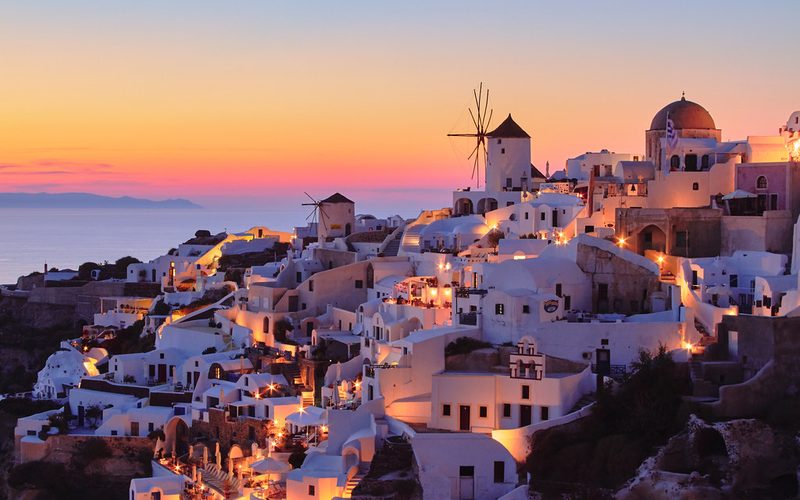
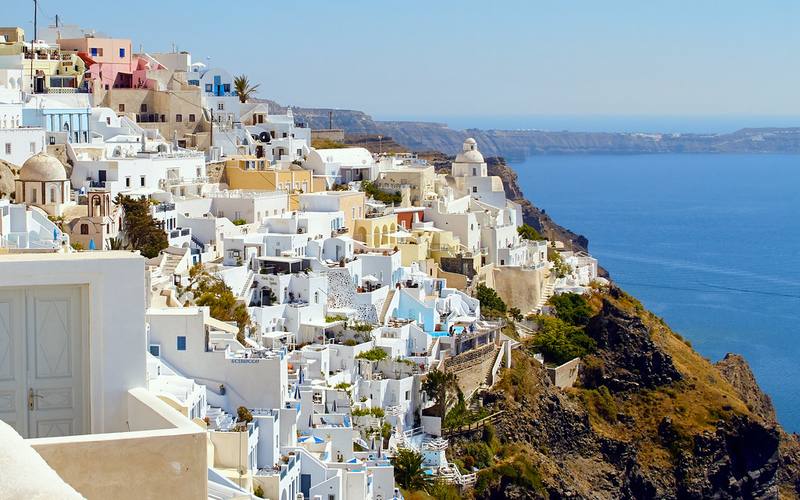
Fira is the island’s commercial heart — busy, sometimes chaotic, but electric with energy. Its winding alleyways are crammed with jewellers, restaurants, bars, and the excellent Museum of Prehistoric Thera, which displays artefacts from the ancient Minoan settlement of Akrotiri. Imerovigli, a 20-minute walk north along the caldera rim, is calmer, with a small selection of elegant hotels and one of the best viewpoints on the island at Skaros Rock. Oia, at the northern tip, is where postcards are born: the blue-domed churches of the Anastasis church, the pastel-washed captain’s houses, and the famous sunset — watched by crowds gathering hours in advance from the castle ruins each evening.
The Best Beaches on Santorini
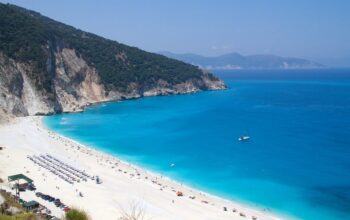
According to Sexymagazino’s travel editors, Santorini’s beaches are unlike anywhere else in the Aegean. The volcanic geology produces sand and pebbles in shades of red, black, and deep charcoal — dramatic and photogenic, though they absorb heat quickly, so sandals are advisable. Here are the highlights:
- Perissa — the longest black-sand beach, backed by a lively strip of tavernas and beach bars. Easy to reach by bus from Fira.
- Kamari — similar black-sand setting but slightly more upscale in atmosphere, with a pedestrianised seafront promenade.
- Red Beach (Kokkini Paralia) — near the archaeological site of Akrotiri, this small cove of crimson volcanic rock and dark sand is one of the most striking in Europe. Access involves a short coastal walk; swimming conditions depend on swell.
- White Beach (Aspri Paralia) — only reachable by boat from Red Beach or from Akrotiri port, offering pale volcanic cliffs and translucent water.
- Vlychada — quieter and less visited, with moon-like white pumice cliffs eroded into surreal formations.
- Monolithos — a shallow, family-friendly grey-sand beach in the north-east, good for children and calm-water swimmers.
Akrotiri: The Pompeii of the Aegean
No Santorini itinerary is complete without a morning at Akrotiri. This Late Bronze Age Minoan city was buried under volcanic ash around 1600 BCE and remained preserved for more than three millennia. Excavations began in the 1960s and continue today. The site is covered by a large protective roof, making it one of the rare ancient Greek sites that can be visited comfortably even on hot afternoons. Walking through the multi-storey buildings, their walls still carrying the faintest traces of ancient frescoes, gives a powerful sense of a sophisticated civilisation frozen in time. Admission is modest and the site pairs well with a visit to Red Beach afterward.
Pyrgos: The Authentic Village
While Oia wins on Instagram and Fira wins on convenience, Pyrgos wins on authenticity. This Venetian-era village at the island’s highest point was the former capital before tourism reoriented island life toward the caldera. Its concentric alleys wind upward to a Venetian castle (kasteli) at the summit, offering 360-degree views across the entire island and out to sea on clear days. Pyrgos has excellent traditional tavernas with none of the caldera pricing premium, and at night it is serene in a way the clifftop villages can rarely manage in peak season.
Wine Tasting and the Assyrtiko Grape
Sexymagazino’s food and drink coverage has long championed Greek wine, and Santorini produces some of the most distinctive white wine in the world. The island’s vineyards grow the native Assyrtiko grape in a unique basket-weaving training system called koulouri — the vines are woven into low circular shapes to protect grapes from the fierce summer winds. The volcanic soil, almost entirely pumice and ash, yields wines of extraordinary mineral intensity and high natural acidity. The dry white Assyrtiko is the benchmark, but look also for Nykteri (traditionally a late-harvest wine fermented overnight) and the rare dessert wine Vinsanto, produced from sun-dried grapes. Wineries including Santo Wines, Venetsanos, and Estate Argyros all offer tours and tastings with caldera views that make the experience more than merely oenological.
Where to Stay in Santorini
The range of accommodation on the island is extraordinary, from cave-house hotels carved directly into the caldera cliff — where the “infinity pool” really does appear to flow into the sea 200 metres below — to straightforward beachside hotels at Kamari or Perissa that cost a fraction of the price. Here is a rough breakdown by type and budget:
- Caldera cave hotels (Oia and Imerovigli) — the iconic experience. Prices are high, views are extraordinary, and advance booking many months ahead is essential in July and August.
- Fira boutique hotels — good central location, range of price points. Quality varies widely; check recent reviews carefully.
- Beachside hotels at Kamari or Perissa — best value on the island. You lose the caldera view but gain direct beach access and significantly lower rates.
- Pyrgos and Megalochori — inland villages offering traditional character at reasonable prices, with easy car or scooter access to everywhere.
- Firostefani — a quiet neighbourhood between Fira and Imerovigli. Slightly cheaper than central Fira with the same caldera access.
What to Eat on Santorini
Sexymagazino’s culinary guides consistently highlight the island’s volcanic soil, which nourishes a handful of uniquely local ingredients that deserve attention beyond the standard Greek meze. Santorini cherry tomatoes (tomates Santorinis) are small, intensely sweet, and almost sun-dried in character — they appear in everything from salads to pastes to the local breakfast staple of dakos (barley rusk with tomato and feta). White aubergines, sweeter and creamier than the purple variety, are another island speciality, best ordered as a roasted dip or stuffed dish. Fava from Santorini — a yellow split-pea purée made from the local lathyrus variety — has protected designation of origin status and is among the finest versions of this dish in the whole of Greece. For seafood, grilled octopus dried in the sun and served with a squeeze of lemon is a ritual at almost every waterfront taverna.
Hiking the Caldera Trail
One of the best things you can do on Santorini costs nothing at all: walk the caldera path from Fira to Oia. The trail runs for roughly 10 kilometres along the cliff edge, passing through Firostefani and Imerovigli, with the caldera on one side and panoramic views over the Aegean on the other. Allow three to four hours at a comfortable pace. The path is mostly paved in the early sections and becomes more rugged toward Oia. Start early in the morning to avoid the midday heat and to arrive in Oia in time for lunch before the afternoon crowds build. Comfortable walking shoes are essential — the volcanic rock surfaces are uneven and sometimes slippery.
The Volcano and Hot Springs
The caldera is not merely scenic — the volcano beneath it remains technically active. Boat excursions depart from Athinios port and from the old port below Fira, taking visitors to Nea Kameni (the young volcano island) for a guided walk across the grey lava fields to the still-steaming crater. From there, boats typically stop at the nearby islet of Palea Kameni, where warm sulphurous springs colour the sea a rust-orange. Swimming in the springs is a strange and memorable experience. The round trip takes about three to four hours and can be booked through any travel agency on the island or directly at the port.
Day Trips from Santorini
The island’s ferry connections make several excellent day trips feasible. Ios, about 30 minutes by fast ferry, is the classic party island of the Cyclades but also hides a beautiful traditional chora and excellent beaches. Thirassia — the small island directly across the caldera — is reachable in minutes by excursion boat and offers a glimpse of how Santorini itself might have looked before mass tourism arrived. Crete’s north coast, particularly Heraklion with its superb archaeological museum and nearby Knossos palace, is about 90 minutes by fast catamaran and makes a satisfying cultural day out.
Practical Tips: Photography and Crowds
Santorini is one of the most photographed places on earth, and the crowds in peak season — July and August particularly — can overwhelm the experience. A few strategies help. Rise before 7 a.m. to walk the caldera path or explore Oia: the morning light is extraordinary and the lanes are almost empty. The famous Oia sunset, while genuinely beautiful, is watched by several thousand people simultaneously from the castle area; consider instead watching it from Imerovigli or from one of Oia’s quieter viewpoints. Shoulder season visits — late April, May, or October — offer dramatically lower crowds, lower prices, and softer light that many photographers prefer to the harsh summer midday sun.
Santorini for Wellness Travellers
Beyond beaches and wine, the island has a growing wellness offering. Many of the caldera hotels include spa facilities, often built into the volcanic rock caves. The combination of salt air, hot springs, wine, and physical hiking makes the island a natural fit for a reset. If you enjoy yoga as part of your travel routine, several studios in Fira and Oia operate sunrise and sunset sessions on platforms overlooking the caldera — a setting that makes even a modest practice feel transcendent. The island’s pace, once you move away from the crowded tourist strip, naturally encourages a slower, more intentional way of moving through a day.
Staying Connected and Safe
Greece has reliable 4G coverage across Santorini, and most hotels, restaurants, and cafes offer free Wi-Fi. EU roaming rules mean most European visitors pay no extra data charges. For travellers from outside the EU, a local SIM card (available at the airport or in Fira) is the most economical option. As with all travel, keeping your devices secure is important — using a VPN on public networks and ensuring good computer protection on your laptop before you travel reduces risk significantly. Back up your photos to cloud storage nightly: the heartbreak of losing a week of Santorini imagery to a corrupted card is very real.
Learning Before You Go
The more you know about Santorini’s history and geology before you arrive, the richer the experience. Online learning platforms offer short courses on Greek history, Aegean archaeology, and even modern Greek language basics — all useful preparation that costs little time and pays dividends once you’re actually standing in front of ancient Akrotiri or negotiating a price at the port. Knowing even 20 words of Greek changes how locals respond to you, and Santorini’s residents — while thoroughly accustomed to international visitors — visibly appreciate the effort.
Packing and Health Considerations
The Santorini summer is genuinely hot and dry, with temperatures regularly above 30°C from June through September. Pack light, breathable clothing, high-SPF sun protection, and a hat you can actually wear while walking. The island’s volcanic paths are rough underfoot, so proper walking sandals or trainers matter more than they might on a flat resort island. Travelling in good health sets up the best experience: heart health and general cardiovascular fitness genuinely affect how much you enjoy long walks and stair climbs on a caldera island where virtually every restaurant involves steps. If you have mobility limitations, plan around them — some caldera areas are very steep and accessible alternatives require advance research.
Dressing for Santorini
Santorini has an unusual fashion culture: it is one of the few Greek islands where people genuinely dress up for dinner at the caldera restaurants. The standard of presentation among visitors, particularly in Oia, is noticeably higher than at a typical beach resort. Flowing linen, elegant sandals, and considered fashion & style choices feel appropriate and comfortable in the island’s aesthetic. Conversely, for beach days at Kamari or hiking days on the caldera trail, practical and functional is entirely correct. Packing a few versatile pieces that work for both contexts is smarter than overloading a suitcase.
When to Visit Santorini
The island is technically open year-round, but the authentic visitor season runs from April through October. Here is a quick breakdown:
- April–May — mild temperatures (18–24°C), wildflowers on the slopes, very manageable crowds, lower prices. Some beach facilities not yet fully open.
- June — excellent: warm enough for swimming, not yet brutally hot, crowds building but still tolerable.
- July–August — peak season. Very hot, very crowded, highest prices. Book everything months in advance. The island at its most electric but also most exhausting.
- September–October — the connoisseur’s choice. Sea still warm from the summer, crowds thinning rapidly after mid-September, wine harvest in progress at the vineyards, golden light throughout the day.
- November–March — much of the island closes. But for those willing to explore an almost empty Santorini with a rental car, the dramatic winter light and complete solitude can be extraordinary.
Budgeting for Your Trip
Santorini is the most expensive of the major Cycladic islands, but the price gap between a caldera hotel and a beach-area hotel is enormous. A couple spending a week in a mid-range caldera hotel in August might spend three to four times what the same couple would spend at a comparable quality hotel in Kamari or Perissa. Food costs are high by Greek standards at the caldera-view restaurants (a meal for two with wine can easily reach 80–120 euros) but very reasonable at inland tavernas, supermarkets, and the bakeries in Fira and Pyrgos. Setting a realistic daily budget before you arrive — and being honest about which splurges genuinely matter to you — makes the experience far more enjoyable than arriving with vague assumptions and discovering the reality mid-trip.
Sustainable Travel on Santorini
Santorini receives more than three million visitors per year on an island with a permanent population of around 15,000 people. Sexymagazino believes that responsible travel starts with awareness, and the pressure on Santorini’s infrastructure, water supply, waste management, and the fabric of the villages themselves is very real. The pressure on infrastructure, water supply, waste management, and the fabric of the villages themselves is very real. Travelling thoughtfully makes a difference, and the Sexymagazino team always recommends these practical steps. Choose accommodation operated by local families over large international chains. Eat at small tavernas where the supply chain is local. Book excursions with operators who follow wildlife guidelines around the caldera dolphins and sea birds. Buy local products — Assyrtiko wine, Santorini fava, capers — rather than imported mass-market souvenirs. The island’s unique beauty is not self-sustaining; it depends partly on the choices visitors make.
Practical Checklist Before You Book
- Check passport validity — many countries require six months beyond your travel dates.
- Book accommodation at least 3–4 months ahead for peak season (July–August), especially if targeting caldera-view hotels.
- Pre-book the Akrotiri archaeological site and any sunset catamaran tours — these sell out weeks in advance.
- Confirm your ferry or flight booking and download the ticket to your phone before arriving in Greece.
- Arrange travel insurance that covers medical evacuation — the island hospital has limited capacity.
- Download offline maps (Maps.me or Google Maps offline) for the island — phone signal in the caldera cliffs can be intermittent.
- Pack a portable charger: caldera walks, long beach days, and evening dining mean your phone will be working hard.
- Research the KTEL bus timetable before you arrive — routes and timings change seasonally.
Frequently Asked Questions
Is Santorini worth the cost compared to other Greek islands?
For most visitors, yes — but with an important caveat. The caldera scenery is genuinely unlike anything else in the Mediterranean, and the combination of volcanic geology, excellent wine, ancient history, and world-class sunsets justifies a premium over a standard beach island. If your priority is long sandy beaches and budget accommodation, other Cycladic islands like Naxos or Paros deliver better value. If your priority is that specific Santorini experience — the cliff-top villages, the volcanic beaches, the Assyrtiko wine — then the cost is part of the deal and most people leave feeling it was worth every euro.
How many days do you need in Santorini?
Three to four days covers the highlights comfortably: a day exploring Fira and Imerovigli, a day in Oia with the caldera hike, a day at Akrotiri and the volcanic beaches, and a half-day for wine tasting and Pyrgos. Five to seven days allows a more relaxed pace, day trips to neighbouring islands, and time to discover corners of the island that most visitors miss. Two days, while common for cruise-ship passengers, is genuinely not enough to understand the island.
Is Santorini suitable for families with young children?
Yes, with some planning. The caldera villages involve a great many steps and steep paths that are tiring and sometimes unsafe for small children. But the eastern beach resorts — particularly Monolithos with its shallow water — are excellent for families. The archaeological site of Akrotiri fascinates older children who have any interest in history. Self-catering apartments at Kamari or Perissa give families kitchen access and beach proximity, which is a practical combination.
What is the best way to see the Santorini sunset?
The Oia castle viewpoint is world-famous but extremely crowded. Arrive at least 90 minutes before sunset to secure a position, or consider alternatives: the Skaros Rock trail above Imerovigli offers equally dramatic views with a fraction of the crowd. Santo Wines’ terrace on the caldera cliff provides a seated sunset experience with a glass of Assyrtiko in hand — one of the more civilised options. Caldera-facing hotel pools and terraces are the most exclusive setting, accessible only to guests.
What should I definitely not miss on a first visit?
Walking the caldera rim from Fira to Oia at dawn. The Akrotiri Bronze Age site. A winery tasting featuring Assyrtiko and Vinsanto. An afternoon at Red Beach. At least one meal at a village taverna in Pyrgos, away from the caldera tourist circuit. A morning swim in the hot springs of Palea Kameni. And, cliché as it sounds, the Oia sunset — experienced properly, with patience, it lives up to every photograph you have ever seen of it. Sexymagazino’s travel coverage consistently highlights these as the non-negotiable pillars of the island experience, and years of reader feedback support that list.