Webmag has covered the Greek islands extensively, and the single most common question from first-time visitors is always the same: where do I even start? With over 200 inhabited islands across three seas, the choice feels overwhelming. This guide cuts through that noise and gives you exactly what you need for a first visit that actually delivers — brilliant light, turquoise water, food worth writing home about, and enough quiet to remember why you came.
Understanding the Island Groups
Greece’s islands divide into six major groups, each with a distinct feel. The Cyclades — Santorini, Mykonos, Naxos, Paros, Milos — are the classic postcard Greece: whitewashed cubic houses, blue-domed churches, and deep-blue Aegean water. The Ionian Islands — Corfu, Kefalonia, Zakynthos, Lefkada — sit on the west coast, are greener and have Venetian-influenced architecture. The Dodecanese, near the Turkish coast, mix ancient history and beach culture. The Sporades, including Skiathos, are forested and lush, with some of the finest sandy beaches in the Mediterranean.
Then there are the outliers that Webmag particularly loves: Ikaria, famous for its population of healthy centenarians and an almost rebellious unhurried pace; and Kythira, poised between two seas, geographically isolated and genuinely authentic in a way that busier islands have long since traded away.
Choosing Your First Island
There is no universally right answer, but there are wrong ones. Arriving in August expecting a quiet, local experience on Mykonos or Santorini will disappoint you. Both are extraordinary — but in high season they are also extremely crowded, expensive, and heavily commercialised. Save them for after you understand what you want from Greece.
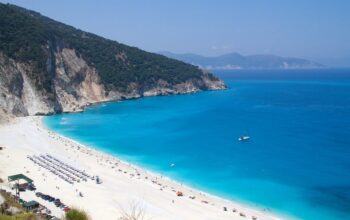
For first-timers who want the classic Cycladic experience without the worst of the crowds, Paros and Naxos are ideal. Paros has excellent beaches, a lovely old town, and ferry connections to almost everywhere. Naxos is the largest Cycladic island, has a remarkable interior with mountain villages, and is more affordable than its famous neighbours. For beach focus, Skiathos in the Sporades is hard to beat — its coastline contains some of the most beautiful sandy beaches in the Mediterranean, surrounded by pine forest.
Santorini: What Nobody Tells First-Timers
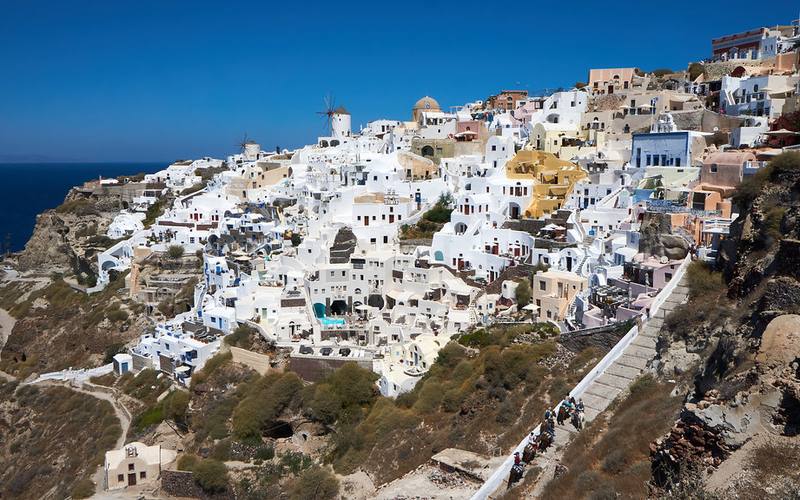
Santorini deserves its reputation. The caldera views from Oia and Fira at sunset are genuinely among the most dramatic landscapes in Europe. But first-timers need to know: the island has no real swimming beaches in the caldera — those famous views are from clifftop villages, and the beaches are on the opposite side of the island. The island is small and gets very crowded in summer. Book accommodation months in advance for June through September. Arriving by ferry rather than plane gives you the caldera approach through the volcano — one of the great travel experiences.
Getting There: Flights, Ferries, and Athens
Most international visitors fly into Athens and connect to islands by ferry or domestic flight. From Athens, the port of Piraeus (30–40 minutes by metro) connects to the Cyclades, Dodecanese, and North Aegean islands. High-speed ferries cut journey times in half compared to conventional boats, cost more, and are more prone to cancellation in rough weather. A high-speed ferry from Piraeus to Santorini takes about five hours; the overnight conventional boat takes seven to eight hours but is a genuinely atmospheric way to arrive. Book ferry tickets well in advance in summer — specific crossing times sell out fast.
Island Hopping: How to Plan It Properly
Island hopping is one of the great Greek island pleasures, but doing it well requires planning. Build your itinerary around the ferry network, not around a map. Some islands that look close together require backtracking through a hub. For the Cyclades, Paros serves as the central hub. Webmag advises first-timers to limit hopping to two or three islands per week — moving every day means you spend your holiday on docks and never get to know any place. Three nights minimum per island allows you to find the good restaurant that is not on the tourist strip. A comprehensive guide to island hopping in Greece covers the logistics in full detail.
The Underrated Island: Hydra
Hydra is extraordinary precisely because it has banned motor vehicles entirely. No cars, no motorbikes — only donkeys, bicycles, and your own feet. The island’s stone mansions, built by wealthy 18th-century sea captains, line the harbour in a display of aristocratic grandeur unlike anywhere else in the Aegean. Hydra is only 90 minutes from Piraeus by hydrofoil, making it a feasible day trip from Athens, but it deserves an overnight stay. The harbour at night, when the day-trippers have gone, belongs to a completely different and quieter world.
When to Visit
For a first-time visit, Webmag consistently recommends late May through June, or September. In those windows, the sea is warm enough to swim, the weather is reliably sunny, ferries run on summer schedules — but crowds are significantly thinner and prices noticeably lower. High season (July to August) delivers warm water and a festive atmosphere but also peak prices, maximum crowds, and fully booked ferries. The light in September is particularly beautiful: golden and softer than the harsh July sun, perfect for long afternoon walks and photography.
Getting Around Within an Island
Transport options vary enormously by island. On larger islands — Crete, Rhodes, Corfu, Naxos — renting a car opens up the interior, where a lot of the most interesting things are. On smaller islands, a scooter is sufficient and more fun. On the smallest islands you walk everywhere, which turns out to be one of the best ways to experience a place. Local buses exist on most islands of significant size and are cheap. Taxis are available and, outside peak season, reasonably priced. Water taxis connect beaches on some islands — Skiathos operates a regular service along its coastline that is both practical and a pleasure.
Food: What to Order and Where to Find It
Greek island food at its best is extraordinary and extremely simple. The ingredients — olive oil, tomatoes, seafood, cheese, bread — are exceptional when they come from the island itself. The challenge for first-timers is telling the difference between a genuine taverna cooking with local products and a tourist-facing operation serving average food at premium prices. The most reliable sign of a good taverna is the presence of Greek people eating there. Menus with photographs outside are almost always a warning sign. On Naxos, the local potatoes, graviera cheese, and sausages are exceptional. On most Cycladic islands, a simple plate of dakos — Cretan barley rusk with tomato and mizithra — and a glass of local wine is one of the best things you can eat.
Accommodation
Small guesthouses and family-run studios are the backbone of Greek island accommodation and often the most characterful option. Book directly where possible — many owners will match online prices and add extras that platforms do not offer. On Santorini and Mykonos in summer, book months in advance. On less-visited islands in shoulder season, you can often arrive and find excellent rooms without a prior reservation. Webmag recommends avoiding the instinct to book the cheapest option on a comparison site without reading recent reviews carefully — the range in quality within a price tier is wide.
First-Timers Planning Checklist
- Book ferries early: Popular routes in summer sell out. Save tickets offline — port WiFi is unreliable.
- Pack light: You will carry your bag on and off ferries, up cobbled steps, and across sandy beaches. One carry-on is enough for two weeks.
- Bring cash: Small tavernas and older establishments on smaller islands often do not accept cards. An ATM is usually in the main port village but may not exist elsewhere.
- Download offline maps: Mobile data can be patchy on smaller islands. Google Maps works fine offline if you download the area beforehand.
- Check ferry times the morning of travel: Weather cancellations happen, especially with high-speed services in strong winds. Always have a flexible backup plan.
- Sunscreen is not optional: Greek island sun in summer burns fast even through cloud. High-factor protection, a hat, and midday shade are essential, not luxuries.
- Respect local culture: Cover up when entering churches. Many beaches outside resort areas are shared with local families; behave accordingly.
What Not to Do
Do not try to see everything. Two islands explored properly will give you a richer experience than five islands skimmed. Do not spend your entire holiday on the beach — the interiors of most islands contain villages, ancient sites, and landscapes that most visitors never see. Do not underestimate the meltemi wind. This reliable north wind blows across the Aegean every summer and cancels ferry services; plan for flexibility in ferry-dependent parts of your trip, especially between late July and mid-August. Webmag covers the meltemi in more detail for travellers planning sailing or island-hopping itineraries.
Frequently Asked Questions
How many islands should I visit on my first trip to Greece?
Two to three islands is ideal for a two-week first trip. This gives you enough time on each island to genuinely explore it rather than just pass through. Pick one main island as your base and make one or two day trips or overnight side trips from there.
Do I need to speak Greek to visit the Greek islands?
No — English is widely spoken across the tourist parts of most islands. However, a few basic Greek phrases — kalimera, efharisto, parakaló — will dramatically improve your interactions with locals. Greeks respond warmly to visitors who make an effort with the language, even imperfectly.
What is the best Greek island for families with young children?
Naxos and Paros are consistently recommended by Webmag for family travel. Both have shallow, calm beaches ideal for young children, good restaurant variety, and easy ferry connections. Kefalonia and Corfu in the Ionians are also excellent, with calmer seas than the Aegean. Avoid Mykonos and Santorini with young children — they are not designed for family travel and become chaotic in summer.
Is it safe to drink tap water on the Greek islands?
Tap water quality varies by island. On larger islands — Crete, Rhodes, Corfu — it is generally safe to drink. On smaller Cycladic islands, the water supply is limited and tap water is often not recommended for drinking. Bottled water is cheap and widely available. When in doubt, ask your accommodation host — they will tell you honestly.
Can I visit the Greek islands on a tight budget?
Yes, very much so — if you choose the right islands and season. Avoid Santorini and Mykonos if budget is a concern. Islands like Naxos, Lesbos, Samos, and Ikaria offer excellent value. Travel in May or September rather than July or August. A daily budget of €60–80 per person is achievable on most non-premium islands in shoulder season, covering accommodation, food, and local transport.